

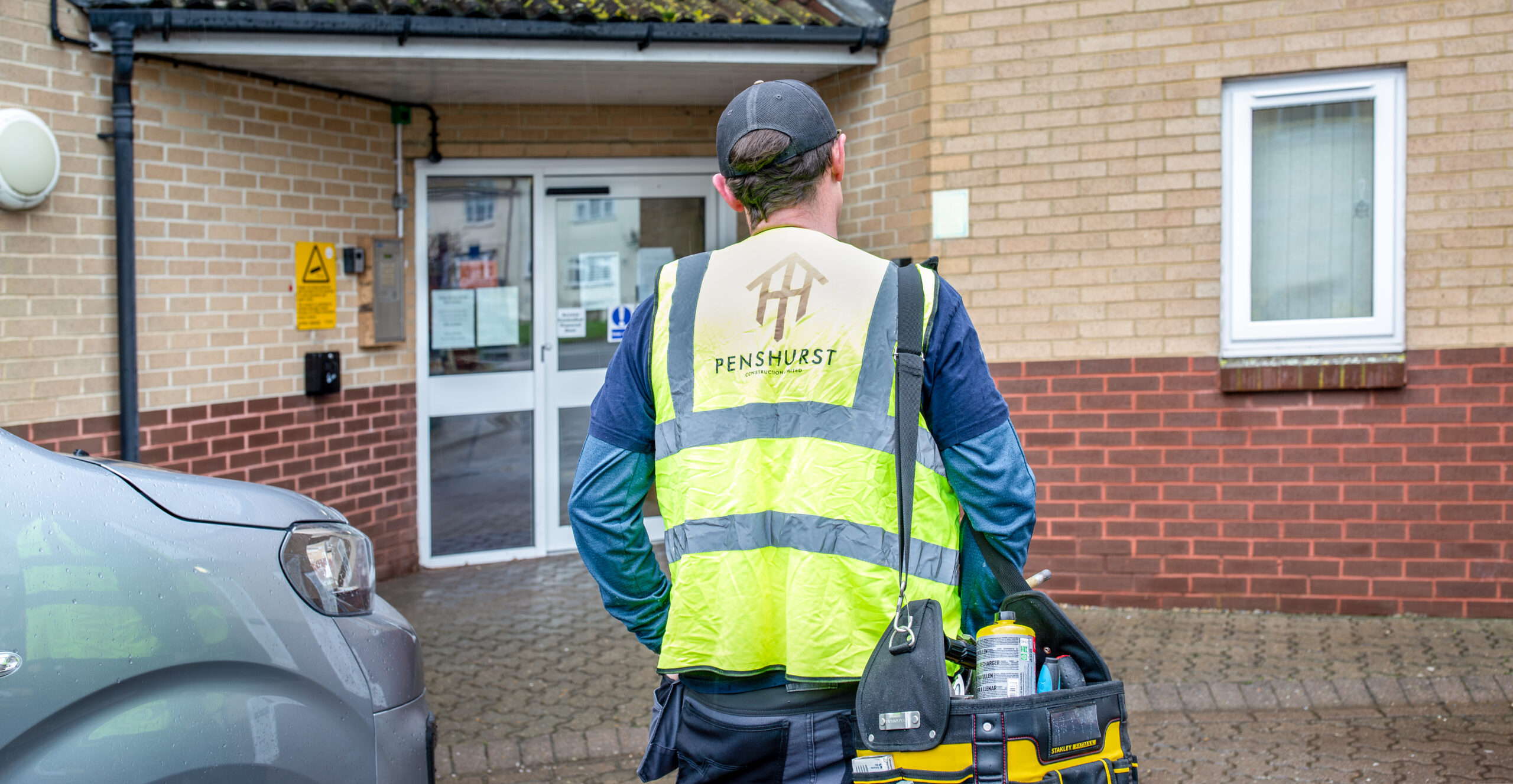
The social housing sector is undergoing a significant transformation. As tenant expectations evolve and regulatory standards become more stringent, housing providers are shifting away from reactive, process-driven maintenance models towards a more tenant-centric approach. This change places residents at the heart of service delivery, ensuring maintenance services are not only efficient and compliant but also empathetic, accessible, and transparent.
Below, we explore the key elements driving this evolution in social housing maintenance.
Preventative approach to maintenance
Traditionally, social housing maintenance has often been reactive, with repairs addressed only after tenants report an issue. However, a preventative approach is becoming increasingly important as housing providers seek to reduce long-term costs, minimise disruption, and improve living conditions.
At Penshurst Construction, we adopt a proactive and preventative maintenance strategy aimed at identifying and resolving issues before they escalate into larger problems. Through planned inspections, data-led asset management, and early intervention, we reduce disruption for tenants while protecting property condition. Our teams actively look for potential risks during visits, addressing minor defects early to prevent future disrepair, minimise emergency repairs, and improve long-term property standards.
This approach not only extends the lifespan of housing assets but also reduces emergency callouts and enhances tenant satisfaction by preventing avoidable issues such as damp, leaks, or heating failures.
Making every visit count
With rising operational pressures and increasing demand for repair services, housing providers are placing greater emphasis on maximising the value of every contractor or operative visit.
That’s why we ensure that every visit we make maximises value for the tenants. Our operatives are trained to identify additional concerns while on-site, enabling multiple issues to be addressed during a single visit wherever possible. They also take time to provide advice and identify vulnerabilities or safeguarding concerns where appropriate.
This holistic approach reduces repeat appointments, limits inconvenience to residents, and ensures homes are left safe, compliant, and functioning effectively.
Human interaction
While technology plays a growing role in maintenance delivery, human interaction remains central to tenant satisfaction. Residents want to feel listened to, respected, and valued throughout their experience.
At the core of our service is respectful and compassionate human interaction. Our teams understand that they are entering tenants’ homes – acting professionally, courteously, and with empathy at all times. At Penshurst Construction, we promote a culture where tenants feel listened to, respected, and supported. Our teams receive training in customer care, safeguarding awareness, and equality and diversity to ensure interactions are inclusive and sensitive to individual needs.
By prioritising respectful engagement and compassionate service delivery, relationships can be strengthened and overall resident confidence improved.
Direct communication
Clear and direct communication is a fundamental expectation among modern tenants. Residents want timely updates, accurate information, and straightforward access to support throughout the maintenance journey.
We maintain clear and direct communication with tenants throughout the service journey. Appointment confirmations, updates, and follow-up communication are provided using accessible channels suited to tenant preferences, followed by feedback cards once work is completed. We ensure tenants understand what work will be undertaken, expected timescales, and any changes that may arise, helping to build trust and reduce uncertainty.
Transparency and tracking of work
Transparency is becoming a defining feature of effective social housing maintenance. Tenants now expect greater accountability from landlords and contractors regarding how repairs are managed and resolved.
We achieve this through clear reporting and visible tracking of repair and maintenance activities, with tenants kept informed of job status, progress, and completion outcomes.
This not only improves tenant confidence but also supports stronger operational accountability. It means that housing providers benefit from clearer performance monitoring, while tenants gain reassurance that their concerns are being actively addressed.
Tailoring of services
No two tenants are the same, and tenant-centric service delivery acknowledges the importance of tailoring services to individual needs and circumstances.
At Penshurst Construction, services are adapted to accommodate vulnerabilities, accessibility requirements, cultural considerations, and personal circumstances. We work collaboratively with housing providers and support services to ensure reasonable adjustments are made, delivering flexible solutions that prioritise tenant wellbeing and independence.
This personalised service delivery ensures that maintenance support is accessible and inclusive for all residents. By understanding tenant demographics and community needs, delivery is more meaningful with effective services that improve resident outcomes.
Ease of reporting
Simple and accessible reporting processes are essential to tenant engagement. If reporting repairs is difficult or time-consuming, issues may go unreported and worsen over time.
Our approach provides multiple routes for tenants to report repairs or raise concerns, including telephone, email, digital reporting platforms, and client referral channels. Our reporting processes are purposefully designed to be straightforward and responsive, ensuring tenants can easily access support without unnecessary barriers.
As a result, responsiveness is improved, early intervention is encouraged, and the overall tenant experience is enhanced.
Alignment with standards
The move towards tenant-centric maintenance is also being shaped by evolving legislation, regulation, and industry expectations. Following increased scrutiny of housing standards and tenant safety, social housing providers face growing pressure to demonstrate compliance, accountability, and resident engagement.
We align all our service delivery with current regulatory requirements and best practice standards, including Awaab’s Law and wider social housing compliance obligations. We prioritise rapid response to damp and mould emergency cleans within 48 hours, and health-related hazards, ensuring risks are assessed promptly and remedial action is taken within required timescales.
Continuous monitoring, staff training, and compliance audits ensure our services remain safe, accountable, and fully aligned with evolving legislation. The result is more resilient communities where tenants feel supported and heard.
Summary
The emergence of tenant-centric service delivery marks a significant shift in how social housing maintenance is approached. Today’s tenants expect more than timely repairs – they expect transparency, communication, empathy, and services designed around their needs.
Those that embrace preventative maintenance, personalised services, and modern communication tools will be better positioned to meet rising expectations while improving operational efficiency and regulatory compliance.
Ultimately, tenant-centric maintenance is about creating housing services that place people first – building trust, improving wellbeing, and delivering better outcomes for communities across the social housing sector.
